


Sam Fender has donated the entirety of his twenty-five thousand pound Mercury Prize prize money to the Music Venues Trust, which works to protect the United Kingdom's independent music venues.
He was presented with the cheque on 16 October as his new release People Watching was chosen as the top album of the previous year.
He has decided to give the cash to the MVT, in recognition of the crucial part local spots played in his initial steps.
"As an artist couldn't be pursuing my current career if it weren't for all the performances I performed around the North East, and beyond, when I was beginning," said Fender. "These spaces are legendary, but they are facing challenges."
Beginning in 2023, over 150 of these spaces have ceased operations – about 16% of the whole industry in the UK.
Over the past year, top acts such as Pulp, the group Coldplay, Katy Perry and Ed Sheeran have all supported the trust in its attempts to support the industry, by including a small levy to their admission fees, which supports local stages.
Sam Fender also joined in, generating in excess of £100,000 on his live tour to help 38 local spots across England, Scotland, and Wales.
These funds helped locations that were facing potential shutdown due to issues stemming from floods, fires and bereavements, as well as regulatory hurdles, court cases and noise complaints.
Some locations were granted financial assistance in upgrading facilities and technical equipment that directly benefitted musicians and audiences.
"The notion that revenue from performances in big venues supports the independent spots, where it begins for performers like me, is just common sense," the star has said.
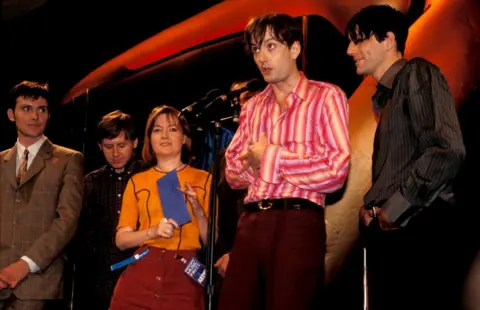
The musician is not the first artist to contribute his Mercury Prize winnings to good deeds.
In Pulp won the award in the mid-90s for their release the album, lead singer Cocker declared that the act would give their winnings to the non-profit War Child.
In 2002, musician Ms Dynamite split her prize among multiple good causes, like the NSPCC and a Sickle Cell organization.
"I also contributed a thousand pounds to the center, to their classes, because I trained in gymnastics when I was a child and they required updated gear," the artist told the media.
Previously, they contributed their funds to the community center that developed their group, alongside other independent music bodies.
Additionally 1994 winners they contributed their winnings to a charity for MS after a acquaintance was identified with the condition.
"The victory was ample," remarked artist Heather Small. "The cash was the extra but we didn't need the cherry, because we had the cake. So our victory impacted another person's life."
In the past week, the MVT revealed it had rescued several small stages in south-east England, by placing them under community ownership.
The first in the city and The Croft in Bristol were bought under the public acquisition scheme, which is backed by a national body and enthusiasts who purchase "stakes" in the venues.
